






kostel Nejsvětější Trojice (Klášter) Kostel
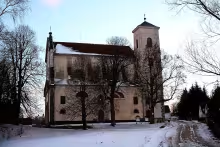
The Church of the Holy Trinity in Klášter I is an outstanding example of early Baroque architecture in the Czech Republic. Located in Nová Bystřice, this Roman Catholic church was part of a cultural heritage site that included a Pauline monastery complex. Built between 1668 and 1682, it reflects both religious devotion and artistic innovation typical of its time.
The origins of this monument date back to the early 16th century when the original church and nearby monastery were destroyed by fire in 1533. The current structure was constructed during a period marked by significant political and religious changes in Bohemia under Habsburg rule. This era saw the Catholic Church's Counter-Reformation efforts influencing art and architecture across Europe, leading to the flourishing Baroque style that characterizes the church.
Architecturally, the Church of the Holy Trinity features early Baroque elements with intricate stucco work by Giovanni Bartolommeo Cometa. The design was influenced by Francesco Caratti's plans and executed under Giovanni Domenico Osi's supervision. Notable architectural features include a westward-oriented choir and an altar positioned at the confluence of three springs, adding symbolic significance to its layout. The eastern portal is adorned with richly carved doors, enhancing the church’s aesthetic appeal.
Throughout its history, the church has experienced significant changes in ownership and administration. Following its construction, the associated monastery was dissolved in 1785 by Emperor Joseph II as part of his broader reforms aimed at reducing ecclesiastical influence. The physical structure of the monastery itself was dismantled in 1959, leaving the church as a solitary reminder of its former grandeur.
The Church of the Holy Trinity houses several artistic treasures that highlight its historical and cultural importance. Among these is a life tree sculpture from the late 17th century, restored in 2001, standing approximately two meters tall. This intricate wood carving depicts events from Christ’s final days alongside symbolic representations of the Holy Trinity. Additionally, an image of the Holy Family with the Holy Trinity by Christian Schröder adds to the church's rich artistic heritage.
Today, the Church of the Holy Trinity remains a cultural monument open for visitors who wish to explore its historical and architectural significance. Its preservation allows contemporary audiences to appreciate the craftsmanship and religious fervor that shaped this early Baroque masterpiece. The church’s unique features, such as its stucco work and symbolic altar placement, make it an essential stop for those interested in Czech history and Baroque art.
Visiting the Church of the Holy Trinity offers a glimpse into a past where faith and artistry intertwined to create enduring monuments. Its historical narrative and architectural beauty invite exploration and reflection, making it a worthwhile destination for anyone interested in cultural heritage.
Historische Meilensteine
- 1533
- The original church and nearby monastery were burned down.
- 1668–1682
- Construction of the current Church of the Holy Trinity was completed.
- 1785
- The monastery associated with the church was dissolved by Joseph II.
Bauliche Entwicklung
Constructed from 1668 to 1682, the church showcases early Baroque architecture with detailed stucco work. The design was influenced by Francesco Caratti and executed under Giovanni Domenico Osi. Notable features include a westward-oriented choir and an altar at the site of three merging springs.
Historische Ereignisse
The original church was burned down in 1533 along with a nearby monastery.
The current structure was built between 1668 and 1682.
The monastery was dissolved in 1785 by Joseph II.
Wissenswertes
- The Church of the Holy Trinity was originally part of a monastery complex that was destroyed by fire in 1533, marking its origins well before the Baroque reconstruction began in the late 17th century.
- The church's altar is uniquely positioned at the confluence of three springs, adding symbolic significance to its layout and reflecting the intertwining of natural elements with religious symbolism.
Führer
Führertext anzeigen
Der Text wurde von künstlicher Intelligenz erstellt und nicht redaktionell geprüft. Er kann Ungenauigkeiten enthalten.
Welcome to the Church of the Holy Trinity in Klášter I, a remarkable testament to early Baroque architecture nestled in Nová Bystřice, Czech Republic. As you stand here, imagine yourself stepping back into time, surrounded by history and beauty. The church's grandeur is immediately apparent, with its intricate stucco work that seems to dance across the walls, crafted by the skilled hands of Giovanni Bartolommeo Cometa.
The origins of this sacred site trace back to a tumultuous past. In 1533, both the original church and its accompanying monastery were tragically consumed by flames. Yet, from these ashes rose a new vision between 1668 and 1682—a testament to resilience and faith. This reconstruction was part of an ambitious project to erect a Pauline monastery complex, with architects Giovanni Domenico Osi and Francesco Caratti at the helm.
As you gaze upon the church's façade, notice how it harmoniously blends strength and elegance, embodying the Baroque spirit that sought to inspire awe and devotion. Inside, your eyes are drawn to the altar—a focal point uniquely positioned at the confluence of three springs. This symbolic placement speaks volumes about the spiritual significance of water as a source of life and purity.
Throughout its history, this church has witnessed many stories unfold within its walls. Though specific historical figures remain unnamed in our records, their presence lingers like whispers from the past, each contributing to the tapestry of tales that make Klášter I so captivating.
One intriguing aspect of this site is its connection to nature through those three springs at the altar's base. This feature not only adds a mystical dimension but also ties the church to the natural world in a profound way.
As you continue your exploration, allow yourself to be enveloped by the atmosphere—feel the weight of history and the whispers of time echoing around you. Each corner of this church invites curiosity and reflection, urging you to delve deeper into its stories.
Thank you for joining us on this journey through time at the Church of the Holy Trinity in Klášter I. We hope your visit has been enlightening and inspiring. May your exploration continue beyond these walls, as there is much more to discover within this historic landscape. Safe travels, and we look forward to welcoming you again soon.
Tipps für Besucher
The best time to visit the Church of the Holy Trinity in Klášter is during late spring or early fall when the weather is mild, and the crowds are smaller compared to peak tourist seasons. This period also offers beautiful natural lighting for photography, enhancing the church's architectural details. Early mornings on weekdays can provide a more serene experience, allowing visitors to appreciate the tranquility of this historical site without the hustle and bustle.
Parking near Klášter is limited, so it’s advisable to use public transportation or park in nearby areas if available. The village of Nová Bystřice has some parking options that can be used as a base for visiting the church. For those traveling by train, the nearest station is in České Budějovice, from where local buses and taxis can take you to Klášter. Always check current public transport routes and schedules online before your visit.
When planning your visit, consider bringing comfortable walking shoes as there may be uneven paths around the church area. A hat and sunscreen are recommended if visiting during sunny days, while a light jacket might be necessary for cooler mornings or evenings. Don’t forget to bring water and snacks, especially if you plan to explore nearby attractions after visiting the church.
For photography enthusiasts, the best spots to capture the Church of the Holy Trinity include its façade and the surrounding monastery grounds, particularly during golden hour when the light is soft and warm. The interior offers dramatic contrasts with its Baroque elements that are best photographed in natural light coming through the windows. Always check for any restrictions on flash photography inside the church.
In the vicinity of Klášter, within a 30-minute drive, visitors can explore other historical sites such as the ruins of the medieval castle in Nová Bystřice and the scenic landscapes around the Šumava National Park. These nearby attractions provide additional context to the region's rich history and natural beauty, making them worthwhile stops for those interested in both cultural heritage and outdoor activities.
Families with children will find the Church of the Holy Trinity a fascinating visit due to its architectural splendor and historical significance. To keep younger visitors engaged, consider bringing along a small guidebook or an audio tour app that explains the church's history in a child-friendly manner. The surrounding monastery grounds can also offer space for kids to explore safely while you enjoy the site.
Unternehmen in der Nähe
Betreiben Sie in der Nähe dieses Denkmals ein Restaurant, eine Unterkunft, ein Geschäft, ein Museum, einen Verleih, ein Wellness oder eine andere Besucherleistung? Zeigen Sie sich direkt den Menschen, die hierher kommen — so sehen sie Sie in der App und im Web:
Unterkunft in der Nähe
Ausflüge und Aktivitäten in der Umgebung
Geführte Touren, Tickets und Aktivitäten in der Umgebung von GetYourGuide
Partnerlink: Wenn Sie beim Partner kaufen, erhalten wir möglicherweise eine Provision. Für Sie ändert sich der Preis nicht.
Ausflüge und Aktivitäten suchen →Themenroute
Tematická výletní trasa: Kostel Nejsvětější Trojice (Klášter) a jeho okolí
1. Kostel Nejsvětější Trojice (Klášter) *Typ:* Religiózní památka *Proč stojí za návštěvu:* Tento barokní kostel je centrem klášterního komplexu a představuje jednu z nejimpresivnějších sakrálních architektur v regionu. Jeho bohaté historické pozadí a umělecká hodnota činí návštěvu nezbytnou pro každého, kdo se zajímá o duchovní i kulturní dědictví Jihočeského kraje.
2. Klášterní zahrada *Typ:* Historický park *Proč stojí za návštěvu:* Klášterní zahrada nabízí klidnou a přírodní prostředí, které doprovázelo život mnichů po staletí. Je to místo ideální pro relaxaci a prohlídku, kde můžete ocenit starobylé stromy a pečlivě udržovaný záhonový design.
3. Klášterní nádvoří *Typ:* Historické nádvoří *Proč stojí za návštěvu:* Nádvoří je srdcem klášterního areálu a poskytuje pohled na architektonickou harmonii celého komplexu. Je to místo, kde můžete prohlédnout historické budovy a si užít atmosféry minulých dob.
4. Klášterní věž *Typ:* Historická věž *Proč stojí za návštěvu:* Výhled z klášterní věže nabízí jedinečnou perspektivu na okolní krajinu, která je obklopena malebnými horami a lesy. Je to ideální místo pro fotografii i pro ty, kteří hledají klidné místo s pohledem na dálku.
5. Klášterní expozice *Typ:* Historická expozice *Proč stojí za návštěvu:* Exponáty v klášterní expozici poskytují hluboký vhled do historie a života kláštera. Zde můžete objevit starobylé artefakty, umělecká díla a dokumenty, které představují bohatou minulost tohoto místa.
Tato trasa vám nabídne komplexní pohled na historický klášterní komplex Nejsvětější Trojice a jeho okolí, kde každý bod přináší své jedinečné zkušenosti.
Saisonale Empfehlungen
Spring: Visiting the Church of the Holy Trinity during spring offers a unique experience as nature begins to awaken around the monastery. The blooming flowers and fresh greenery create a vibrant backdrop that enhances the serene atmosphere of this historical site. As daylight hours increase, the natural light beautifully illuminates the intricate details of the church's architecture, making it an ideal time for photography enthusiasts. Visitors should be prepared for occasional showers by wearing comfortable layers and bringing a waterproof jacket. Early mornings are often quieter, providing a peaceful environment to appreciate the surroundings before larger crowds arrive.
Summer: Summer is one of the busiest times at the Church of the Holy Trinity, with long daylight hours allowing visitors to explore the monastery in full light. The lush greenery surrounding the site adds to its picturesque charm, making it an excellent time for outdoor activities and picnics nearby. However, due to increased visitor numbers during this peak season, it is advisable to arrive early in the morning or later in the afternoon to avoid crowds. Light clothing is recommended to stay comfortable under the warm sun, along with sunscreen and a hat for protection.
Autumn: The autumn months bring a stunning transformation to the area around the Church of the Holy Trinity, as the foliage changes into vibrant shades of red, orange, and yellow. This colorful display creates a magical atmosphere that enhances the historical ambiance of the site. Cooler temperatures make it a pleasant time for walking tours, and the shorter days mean visitors should plan their visit accordingly to ensure they have enough daylight to explore. Layered clothing is recommended to accommodate varying weather conditions throughout the day.
Winter: Winter at the Church of the Holy Trinity offers a serene and contemplative atmosphere as snow blankets the surrounding landscape, creating a picturesque scene reminiscent of a postcard. The shorter days mean that natural light plays an important role in highlighting the church's architectural details, making early visits essential to fully appreciate its beauty before closing time. Visitors should dress warmly with thermal layers, hats, gloves, and sturdy boots for comfort during their visit. Despite potentially fewer visitors due to inclement weather, it remains a tranquil time to experience the monastery’s peacefulness.
Visualisierungen und künstlerische Ansichten

Vizualizace jsou generovány umělou inteligencí a slouží jako inspirace.
Fotos aus der Umgebung
Echte Aufnahmen aus der Umgebung des Denkmals


Aufnahmen: Mapillary, Lizenz CC BY-SA 4.0
Tipps von Besuchern
Noch keine Tipps. Sei der Erste!
Melden Sie sich an und fügen Sie Ihren Tipp hinzu.
Quellen und Literatur
Fotografie: Chmee2 or Valtameri / CC BY-SA 3.0 — Wikimedia Commons. Autor a licence se zobrazí i po najetí na snímek.
Faktickým podkladem tohoto textu byl článek na Wikipedii, jehož autory jsou přispěvatelé Wikipedie. Článek je dostupný pod licencí CC BY-SA 4.0.
Standort auf der Karte
Fotografie návštěvníků
Zatím žádné fotografie. Buďte první, kdo přidá fotografii z návštěvy!
Melden Sie sich an a přidejte svou fotografii nebo hodnoťte.
Za ověřenou návštěvu v aplikaci získáte víc bodů — poznáme podle GPS, že jste na místě.
Bewertungen und Kommentare